Nerves, tears and torn tracks: How combat-robot engineers went through the Third Assault Brigade’s crash test
© Photo: oboronka.mezha.ua


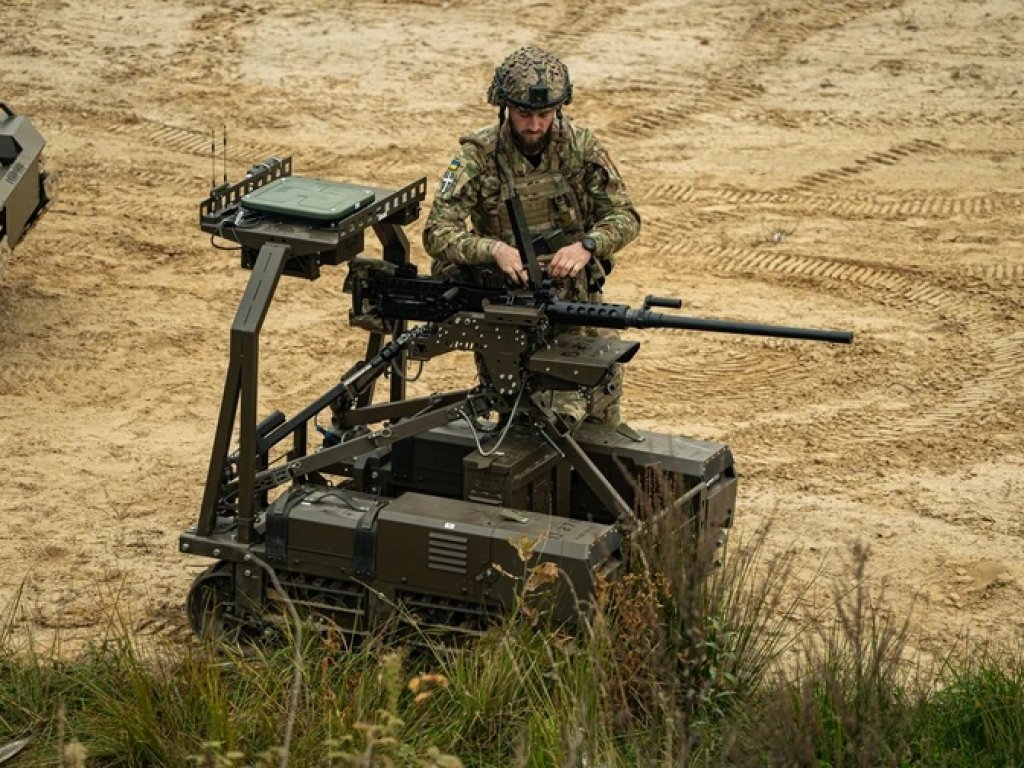
Ground robotic systems (UGVs) are one of the least obvious segments of the defense industry. Remote-controlled machines may seem simple, but when it comes to real combat conditions—mud, sand, ditches, enemy drones—most of them start losing tracks and connectivity, and their engines and other components fail.
Ukrainian UGV manufacturers face heavy criticism from the military because machines often arrive at the front in an unfit state. Their specifications do not match real operational needs, so operators still have to rework them in their own workshops.
Even so, market leaders have begun to emerge—teams that listen to troops’ feedback and are getting close to producing truly functional machines. Some of them are already saving lives and hauling dozens of tons of cargo to evacuate people.
But the majority remain objectively raw. The combat UGV niche is especially difficult: a robot must not only reach the target, but also carry a turret, aim, hit, and withstand return fire.
On October 23–24 in Lviv region, Snake Island Institute together with soldiers from NC13 company of the 3rd Assault Brigade (3rd AB) and Ab3Tech organized a public crash test of strike ground robots to assess the readiness of Ukrainian machines. The obstacle course was designed by soldiers of the Third Army Corps, currently Ukraine’s most experienced operators of combat UGVs.
Developers could not tailor the course to their strengths or prepare in advance—only rely on their own skills and improvisation. This was one of the rare events where manufacturers had to demonstrate effectiveness in practice rather than show decks and slick demos.
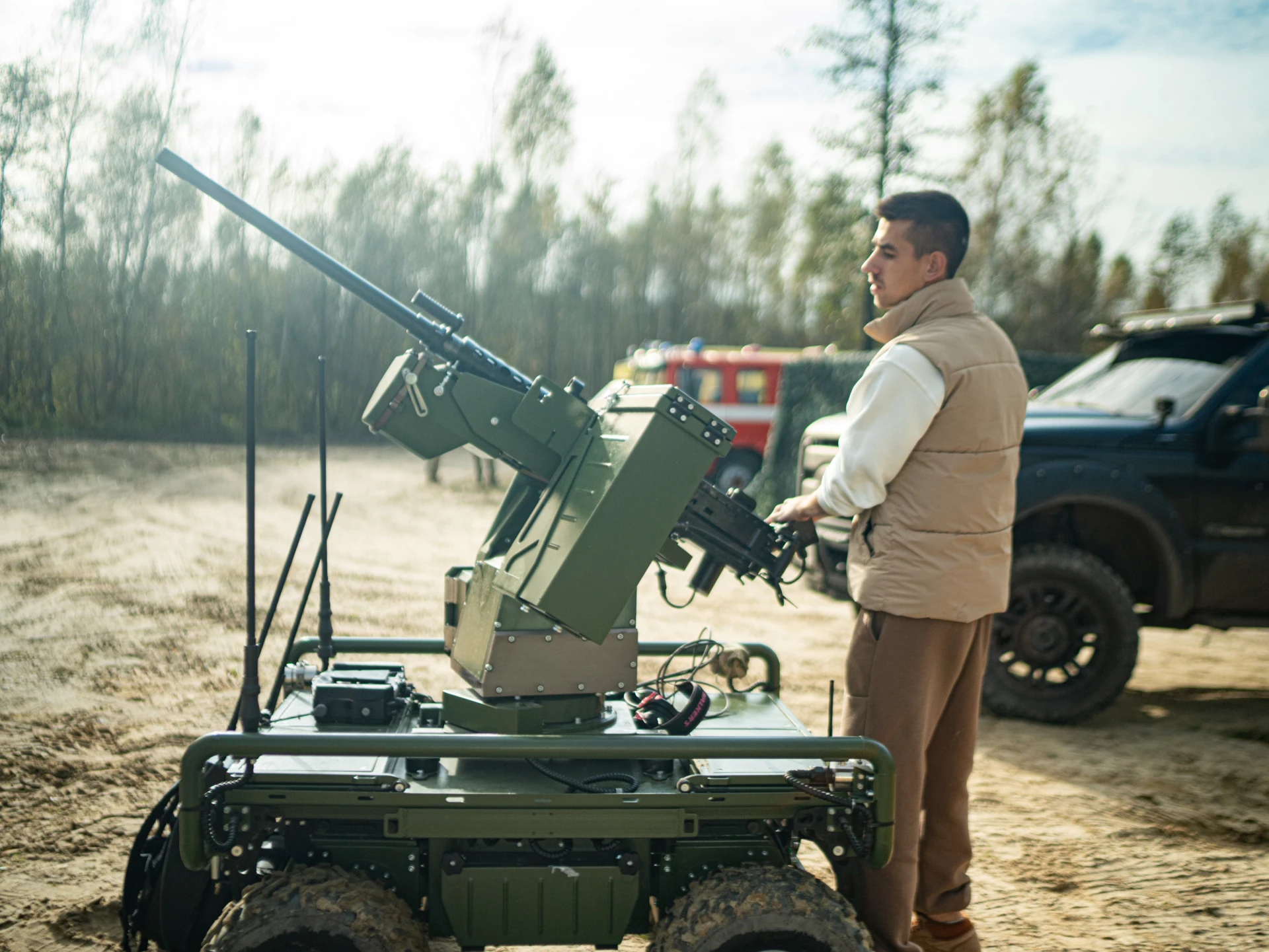
The first stress test for strike UGVs
UGVs are a relatively new technology, so such crash tests are crucial.
“The strike UGV market in Ukraine is raw; they are not used systematically. The first unit dedicated solely to strike robots was created only two months ago. Combat UGVs will never replace infantry, but, for example, in June one infantry battalion took a position using only loitering munitions—no personnel involved and no losses,” Snake Island Institute’s head of Defense Tech, Viktoriia Honcharuk, told Oboronka.
The obstacle course was tough: 5 kilometers of difficult hilly terrain with all soil types—chernozem, sand, bog, and gravelly ground. It included small ditches and fallen logs, marked left and right with warning tape. Beyond the tape—mines.
Rules. Each system had to reach a firing line and engage targets from 300 to 50 meters. Notably, robots were controlled by the manufacturers themselves from a dugout—without line of sight or stable connection—navigating via the robot’s onboard camera and a scout drone feed.
This was to make developers feel what soldiers face. It also made the task harder, since the drone would not be flown by an ace operator.
If a robot stopped, crossed the tape, or got stuck, its run was halted. The team had no right to retrieve it—it became an additional obstacle for those starting after.
Before the run, participants could only watch a quadcopter fly-over video, as in real life. Scouting the course on foot was forbidden—though someone tried.
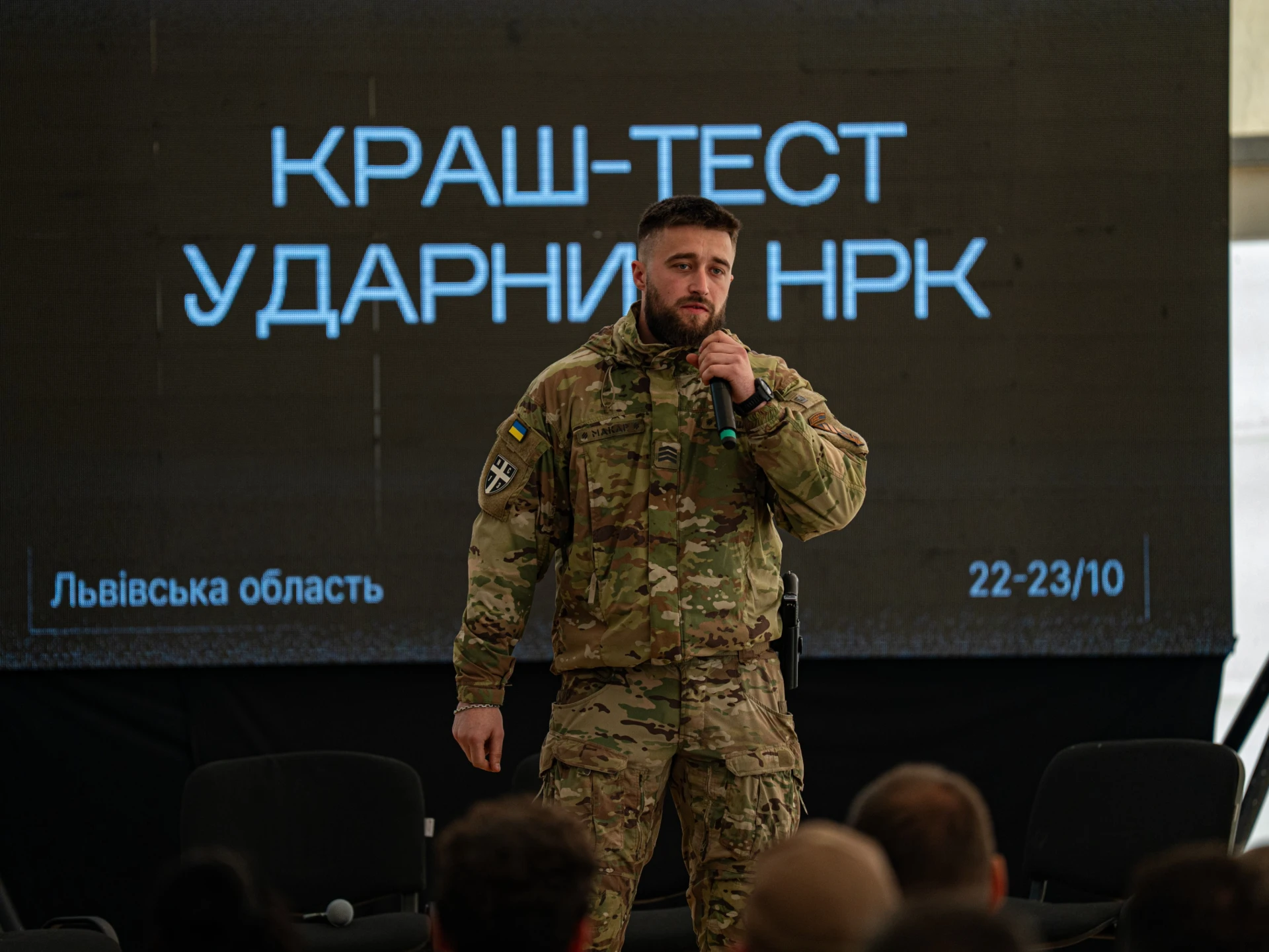
“I know some of you attempted to walk the route despite the ban, so we changed parts of it,” said “Makar,” commander of the 3rd AB’s strike UGV company. He explained that in combat troops cannot reconnoiter and must break a path with the tools they have on hand.
These strict rules reflected the reality of the battlefield. Because of intense fighting, the gray zone has turned into a kill zone—a stretch of positions, hideouts, traps, and raids extending 15 km from the line of contact. Hundreds of enemy FPV drones fly overhead there. UGVs must operate in these conditions to spare people.
One dropped out before the start
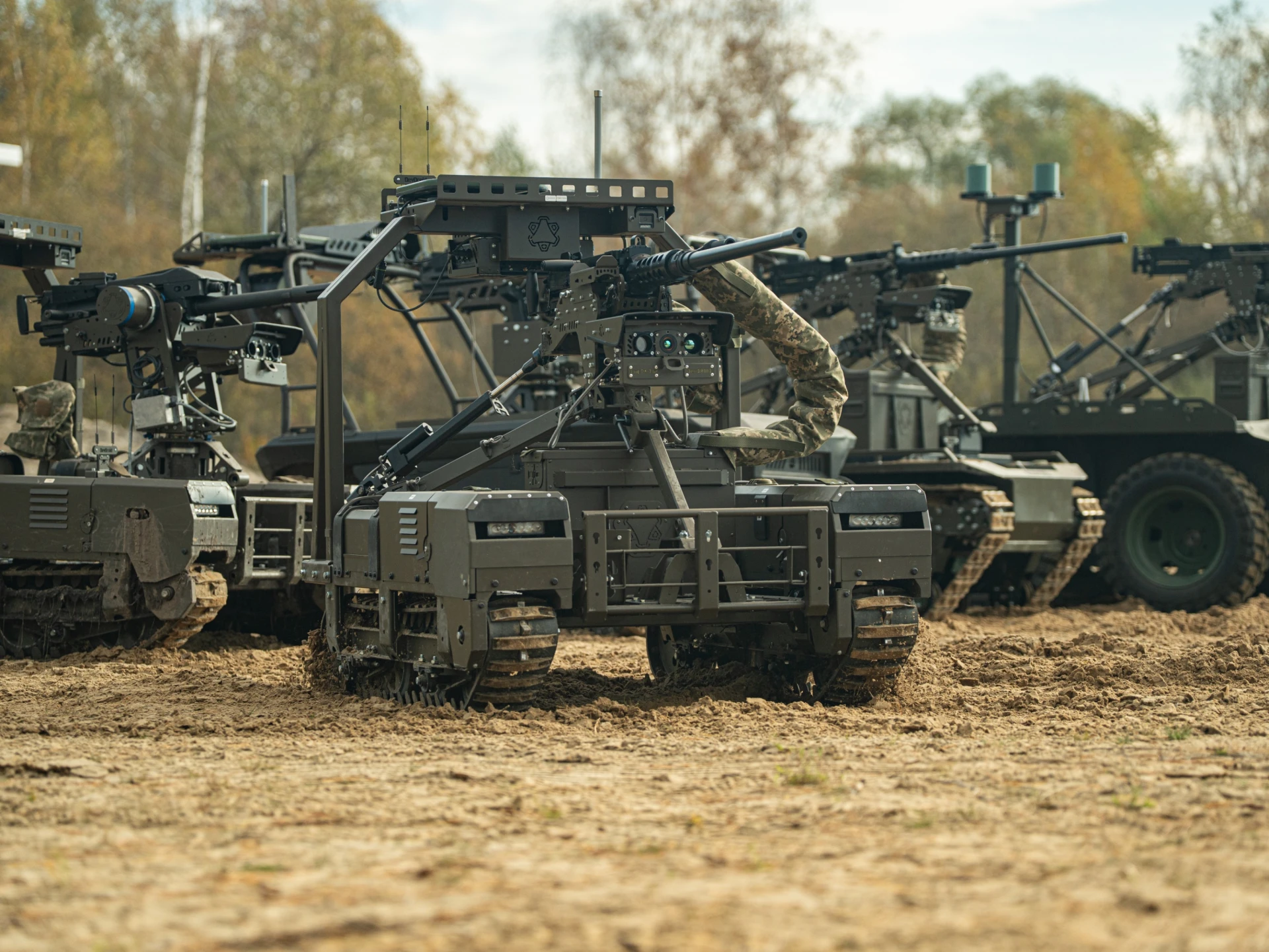
Thirteen strike UGVs took part, from DevDroid, FRDM, UGV Robotics, TEMERLAND, Rovertech, Tank Bureau, Ark Robotics and others. Several market leaders—developers of “Termit,” “Lynx,” and Ratel—were absent. Still, the lineup included both new systems and those well known to troops.
There were tracked and wheeled platforms. Some used DevDroid’s Droidbox control system, which allows multiple comms links—radio, digital, cellular, satellite—and can integrate Wolly’s combat module that uses AI elements for autonomous target detection, lock and tracking.
Each manufacturer had its own focus and trade-offs: some build proprietary turrets; others standardized chassis; some added laser guidance; some localized component production instead of buying from China; others came from proven logistics robots moving into the combat niche.
But the task was equally hard for all: combat UGVs remain among the toughest problems.
The day before, teams “zeroed” their weapons—mandatory before the test. One machine dropped out by the developer’s decision, not even reaching the start.
A trial of nerves—and hardware
The start was delayed nearly two hours. Many teams faced technical issues.
“Human factor—batteries undercharged; optics or comm connectors broke in transit. For combat, everything must be packed, with spare parts carried along,” soldiers explained.
The beginning: a not-too-hard forest section with ruts and tall grass. Then it got tougher—sandy climbs and descents, a gravel segment, and an easier straight before the targets.
The first robot on the course stopped in the woods—its machine gun wedged into a half-meter trench. That proved fatal, as its digital link antennas didn’t work at that angle. The team tried to switch to a backup link, but the UGV stayed put and was out. It became an obstacle for the next machine.
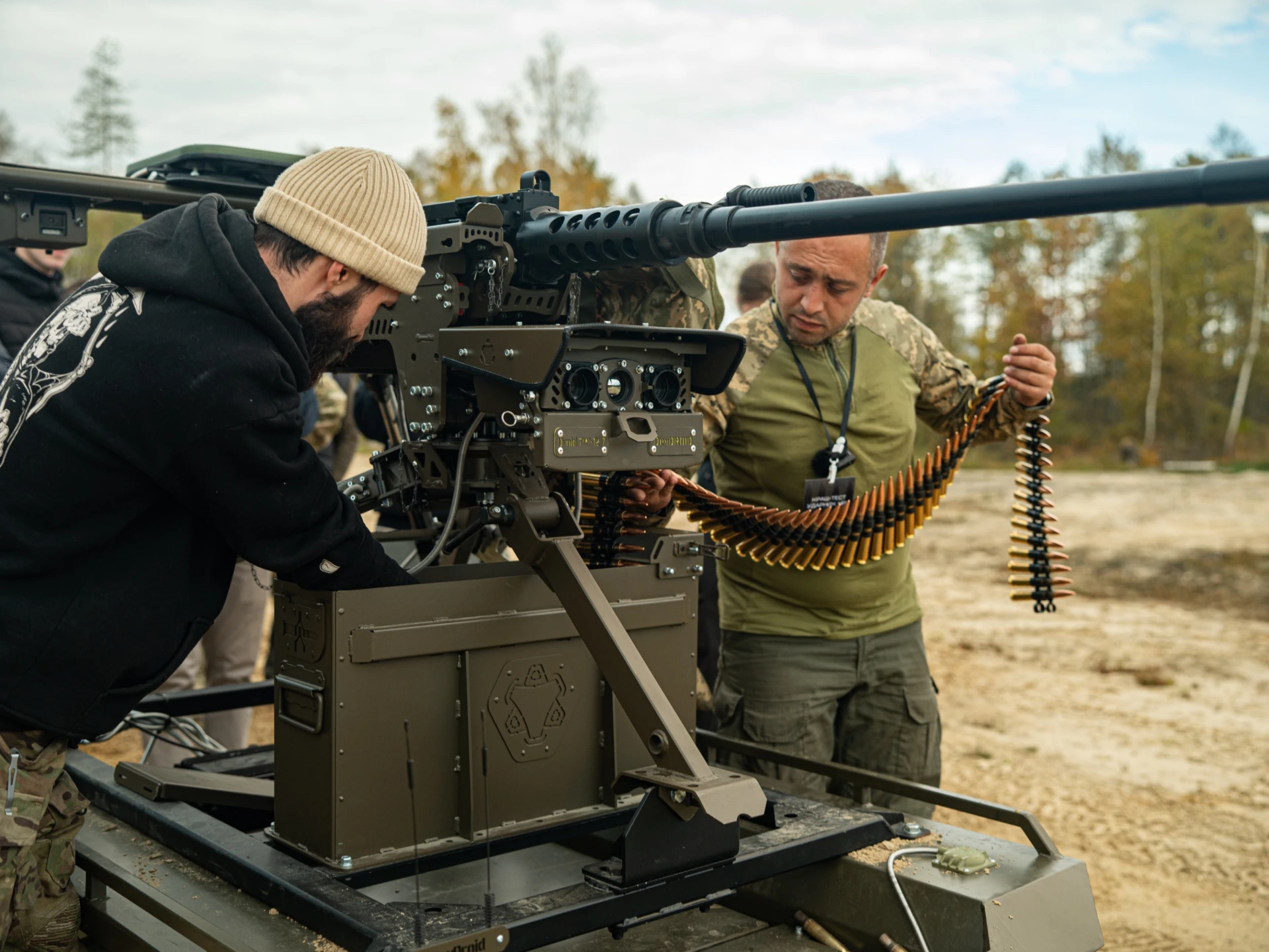
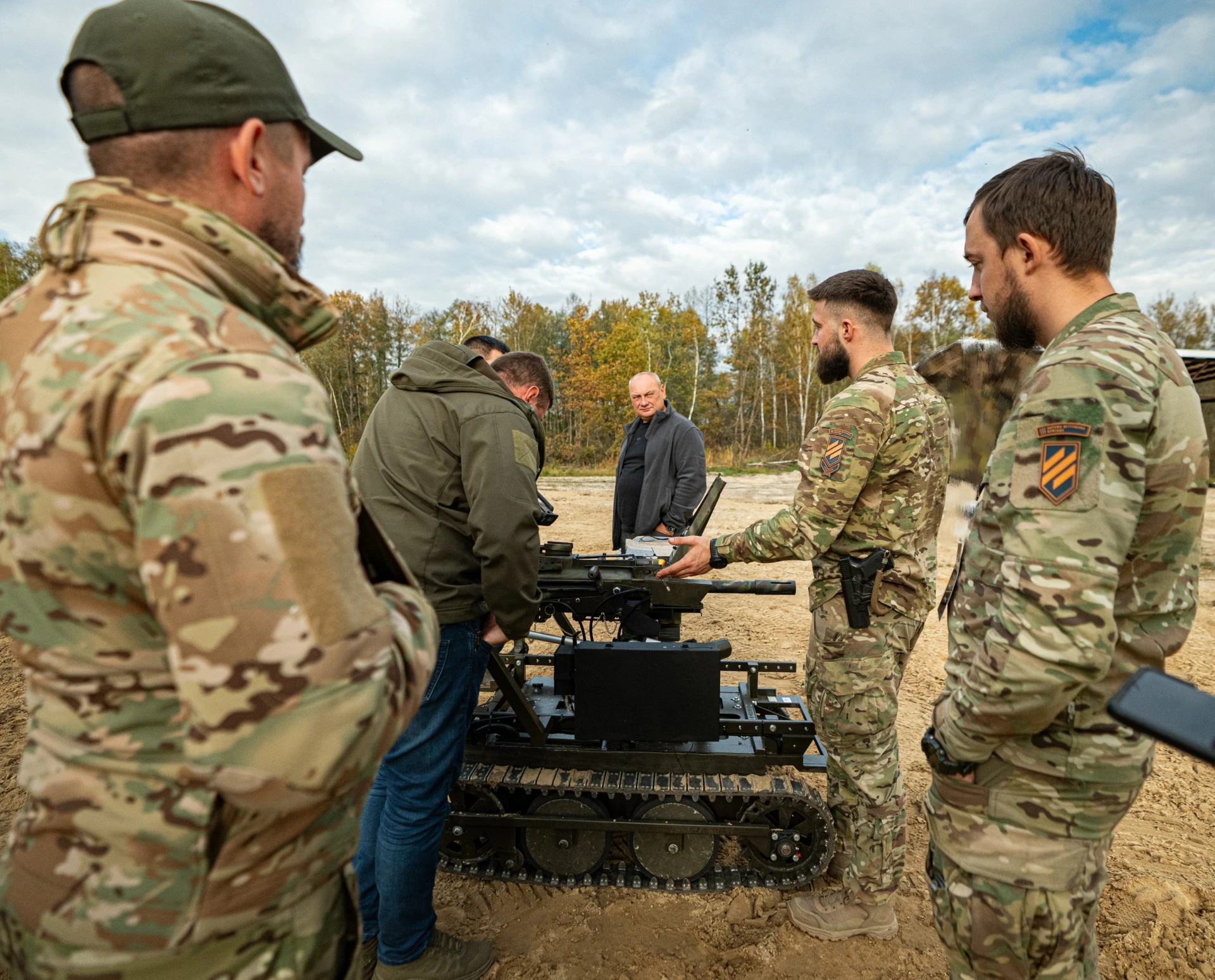
Next up, a light tracked robot. It handled the ruts, drove 500 meters, then began slipping on moss-covered logs and dropped out.
“It threw a track. That’s it. Thrown tracks, flips, turret problems—exactly what we see at the front. You also need a plan to recover a robot from the field. Do we send infantry or operators?” “Makar” commented as the big screen showed the action.
“There are ten meters of logs here. What if you need to go ten kilometers like this? Such stretches exist. We’re not here to rank vendors, but to push them toward real conditions,” added “Kaban,” another soldier.
Before the machine was even recovered, the developer was already on the phone with the track supplier, discussing reinforcements.
“The course is very hard. We rate our chances at 10–20%,” one of the next teams admitted—rightly so: their robot ended up among those that failed—either not reaching the line or not firing.
One robot lost its turret mid-run and stopped; another with fiber-optic control got stuck among branches.
Finishing the course felt like having a child
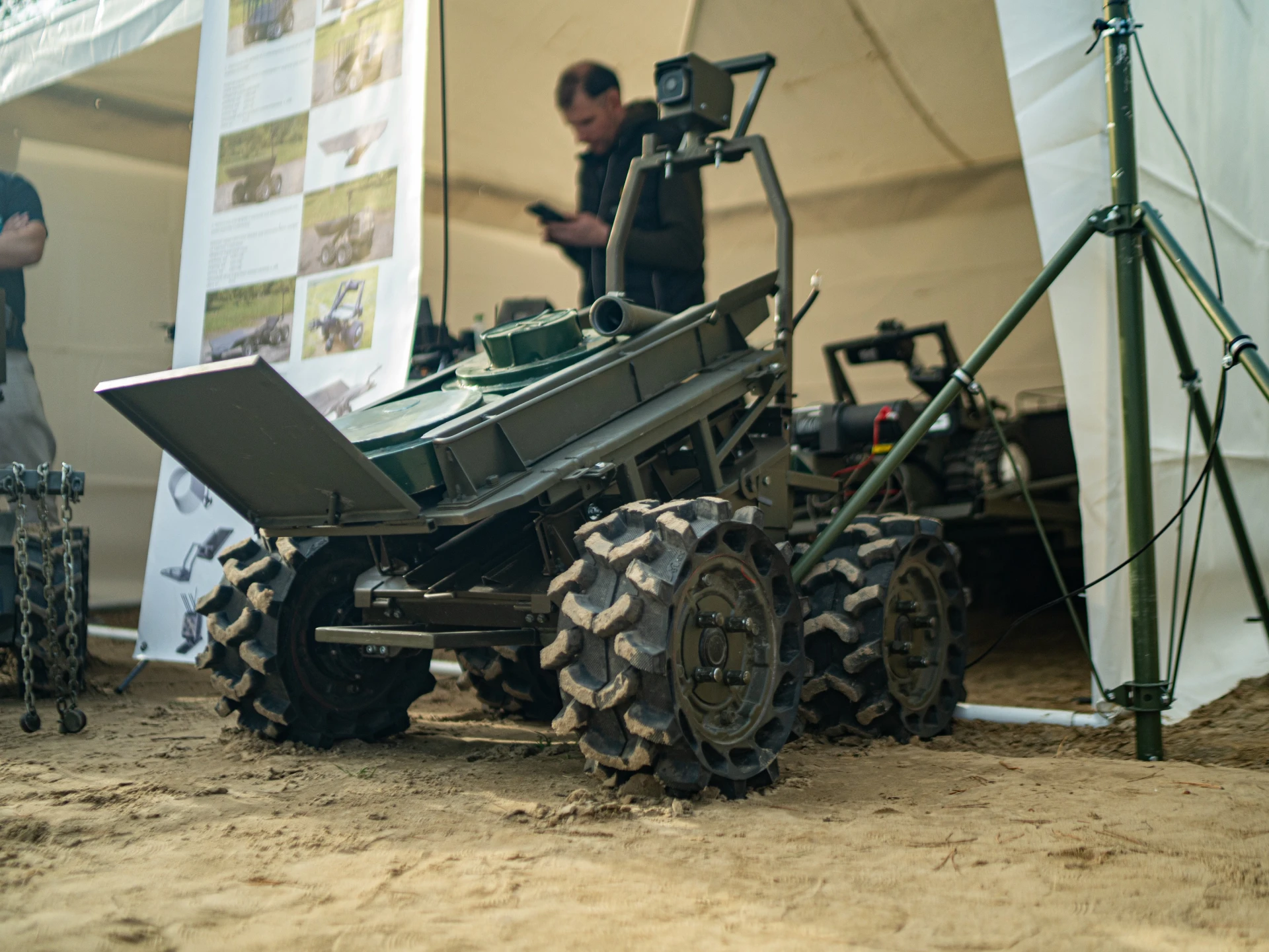
A wheeled UGV rolled out next. According to its maker, wheels are more versatile: at the front one of their robots lost a wheel to a mine and still returned 7 km on three.
It entered the obstacle lane. In the forest it hit a birch twice and lost one ammo belt, but kept going.
“I feel like I did when my son was born,” the developer said as the robot descended a hill. It reached the final straight and fired the remaining rounds despite turret damage. Five of six hit the target. The run was counted as a success.
A larger wheeled system from the same team followed, then a tracked logistics robot converted for combat—already widely used at the front.
The first sometimes lost link but recovered (almost everyone had comms issues) and occasionally switched to the night camera. It cleared the forest and climbed the sandy hill. The next robot followed closely in its tracks. Both passed the gravel segment and fired at targets. Successful finishes.
Fewer than half finished
By late night, only 5 of 13 robots completed the course and successfully fired. One more finished the route but failed to shoot. Two covered only about 5% of the course; two reached roughly 20%; several stopped midway.
“I’m not disappointed. This is what we expected, given the market. We did this to show manufacturers how their UGVs actually perform—not to push them out of the field. Whether they improve depends on motivation.
Some openly say they’re in it for profit; others work purely for the front. For half of those who failed, the problems are minor and fixable within a month or two,” “Makar” summed up.
The key message: manufacturers must listen to the military—that’s the path to progress. In late August, operators publicly criticized one producer at a Lviv forum. They arrived at these tests with an updated version and completed the course confidently.
“In recent months we’ve criticized developers for poorly engaging with troops and focusing first on sales. Now things are changing: companies not only work more closely with the military, they’re collaborating with each other—some make better turrets (critical for accuracy), others stronger tracks or wheels where others are still weak,” said a soldier with the callsign “Khimera.”
After the tests, some teams received concrete tasks: improve maneuverability, mountings, batteries, and cable protection. The goal is to standardize key assemblies and establish a steady feedback loop between front and industry.
“I want my people to have more rest and not spend so much time in the workshop. That’s only possible if manufacturers pay more attention to quality, assembly, and QC. As Khimera said, until recently 100% of UGVs arriving to our brigade had to be completely reworked. That’s massive effort the military shouldn’t have to do,” “Makar” concluded.
P.S. Oboronka deliberately did not name specific teams that did or did not complete the course, as requested by the organizers.
Read also:
“You Are the Cosmos” Becomes the Second Highest-Grossing Ukrainian Film of 2025
Russian Attack Destroys Residential Building in Ternopil, Causing Casualties
FAVBET Tech ranked among Top 5 taxpayers in Diia.City
A Boy Who Dreamed of Becoming a Chef — Now His Croissant Recipe Is Sold Across Ukraine